



THE PRECISION BRIEF
Eight Developments Advancing Precision Medicine, Biotechnology, and Clinical Research
By Anil Bajnath, MD
Scientific progress rarely follows a straight path from discovery to clinical application. A promising molecular target may take years to become a viable treatment. A diagnostic technology may demonstrate remarkable analytical performance without improving patient outcomes. And a therapy grounded in compelling biological mechanisms may ultimately fail when subjected to rigorous clinical evaluation.
These distinctions are central to understanding the evolution of precision medicine.
Over the past two weeks, developments across genomics, oncology, gene therapy, and biotechnology have illustrated both the potential of increasingly precise medical interventions and the challenges involved in translating scientific advances into meaningful clinical benefit.
This edition of The Precision Brief examines eight developments, what the evidence demonstrates, and the questions that remain.
01. Rapid Whole-Genome Sequencing May Change the Timeline of Pediatric Cancer Care
Discovery | Genomics | October 6, 2026
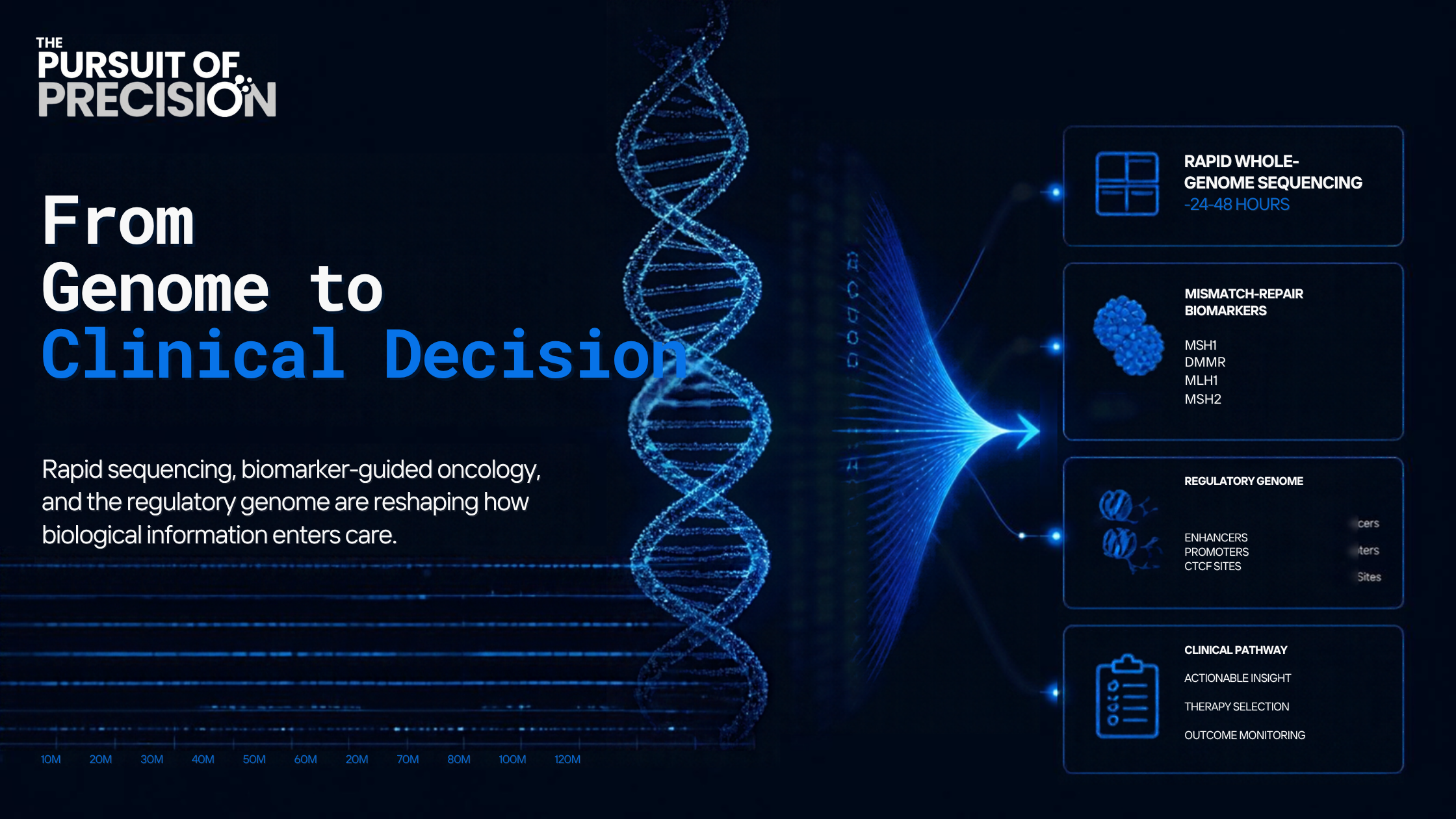
Whole-genome sequencing has become an increasingly valuable tool in pediatric oncology, identifying molecular alterations that can inform diagnosis, risk stratification, and treatment selection. Yet one of its practical limitations has been turnaround time. Clinical decisions often must be made within days, while conventional genomic testing may require several weeks.
A study published in Nature Communications evaluated a rapid whole-genome sequencing workflow in 54 children with suspected or confirmed cancer. Researchers reduced the average turnaround time from 42 days to approximately three days.
The rapid approach identified 95% of clinically actionable variants detected across the study cohort, compared with 89% identified through standard testing.
Among 35 prospectively assessed patients, clinicians reported that rapid sequencing informed management in 49% of cases, including earlier access to targeted therapies, improved risk stratification, and avoidance of potentially unnecessary interventions.
The significance is not simply faster sequencing. It is the possibility of integrating comprehensive molecular information into the initial clinical decision-making process, when that information may be most consequential.
However, this was a relatively small, single-center study. Larger investigations are needed to establish reproducibility, cost-effectiveness, scalability, and whether faster molecular diagnosis consistently improves long-term outcomes.
The question worth examining: At what point does the speed of genomic information become as important as the information itself?
02. Immunotherapy Advances Into Earlier Treatment of Mismatch Repair-Deficient Colon Cancer
Clinical Practice | Precision Oncology | October 8, 2026
The FDA approved atezolizumab in combination with fluoropyrimidine- and oxaliplatin-based chemotherapy for the adjuvant treatment of stage III mismatch repair-deficient colon cancer.
Mismatch repair deficiency, or dMMR, reflects impaired mechanisms responsible for correcting errors during DNA replication. Tumors with this characteristic often accumulate mutations that can generate immunogenic proteins, providing a biological rationale for immune checkpoint inhibition.
The approval was supported by the randomized ATOMIC trial, which evaluated the addition of atezolizumab to standard chemotherapy following surgical resection.
The trial demonstrated a significant improvement in disease-free survival, with approximately a 50% reduction in the hazard of recurrence or death in the investigational group.
This represents a meaningful development in biomarker-directed oncology. The treatment strategy is informed not merely by the anatomical location or stage of a malignancy, but by molecular characteristics that influence therapeutic response.
Importantly, disease-free survival is not interchangeable with overall survival. Longer follow-up will help clarify the durability of benefit, long-term safety, and effects on survival.
The broader implication is the increasing relevance of molecular profiling earlier in cancer management, where biological information can guide decisions beyond conventional histopathological classification.
The question worth examining: How should molecular characterization influence treatment selection before disease recurrence rather than only after progression?
03. Beyond DNA Sequencing: Understanding the Regulatory Genome
Discovery | Epigenomics | Research Perspective
The expansion of genomic medicine has substantially improved our ability to identify inherited and acquired genetic variation. Yet DNA sequence alone does not fully explain how genes are regulated, why cells with identical genomes behave differently, or how genetic susceptibility translates into disease.
Chromatin accessibility provides an additional layer of biological information by identifying regions of DNA available to transcription factors and other regulatory machinery.
These regulatory regions help determine when and where genes are expressed, influencing cellular identity, developmental processes, and responses to environmental signals.
Advances in single-cell genomics and epigenomics now allow researchers to examine these processes across distinct cell populations, revealing regulatory patterns that may be obscured in conventional bulk tissue analysis.
This is particularly relevant to complex diseases, where susceptibility frequently involves noncoding genetic variation and cell-specific regulatory mechanisms.
Integrating genomic, transcriptomic, and epigenomic information may improve our understanding of disease mechanisms and identify therapeutic targets that cannot be inferred from DNA sequence alone.
Nevertheless, greater molecular resolution does not automatically translate into better clinical decisions. The challenge remains demonstrating that additional biological information improves risk prediction, diagnostic accuracy, treatment selection, or patient outcomes.
The question worth examining: Will the next major advance in precision medicine come from sequencing more genomes, or from understanding how those genomes function?
04. Optogenetic Therapy Demonstrates Partial Restoration of Visual Function
Translation | Gene-Based Therapeutics | October 7, 2026
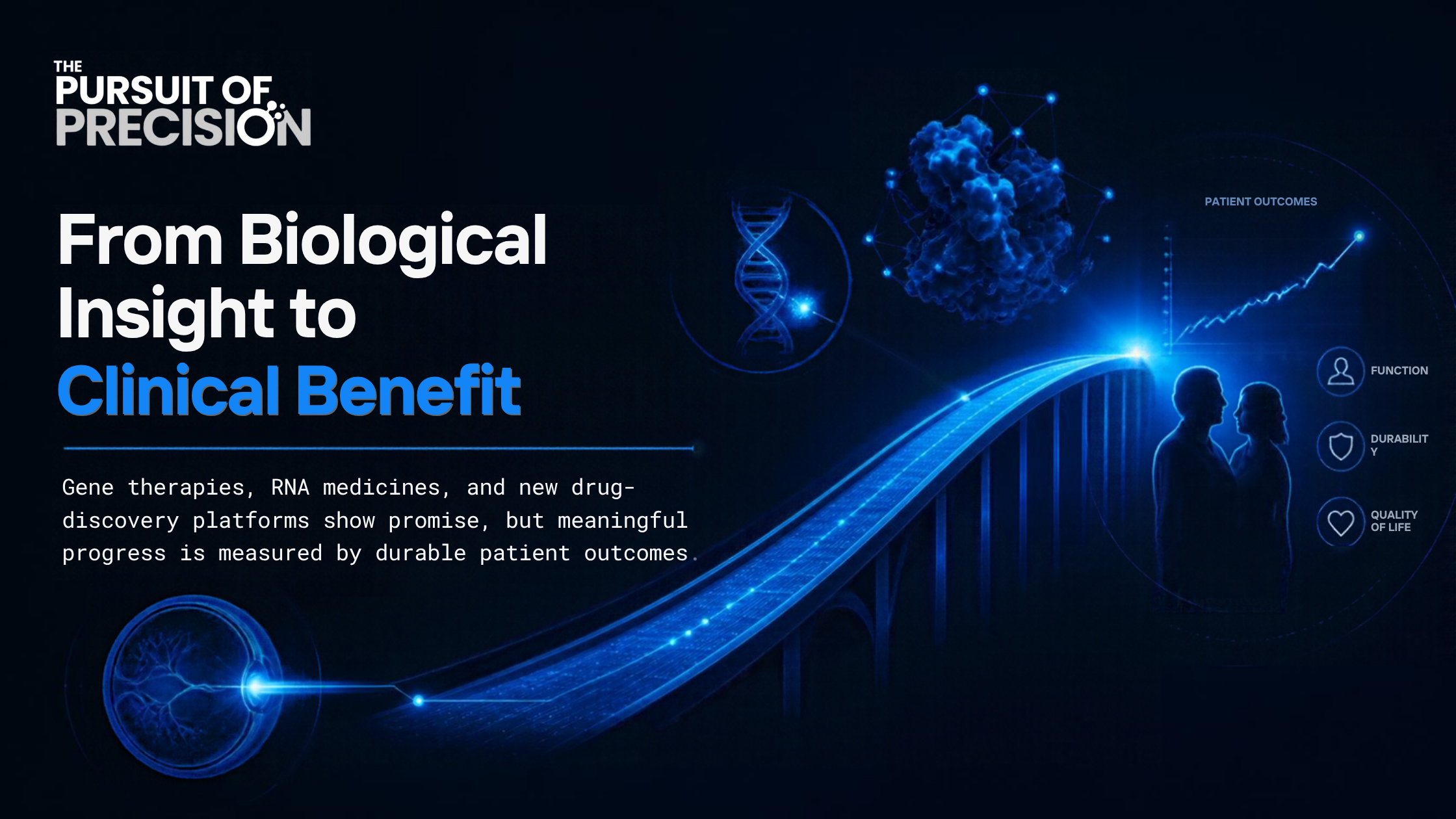
A study published in The New England Journal of Medicine evaluated an optogenetic approach to restoring aspects of visual function in patients with advanced retinitis pigmentosa.
Retinitis pigmentosa encompasses a group of inherited retinal disorders characterized by progressive degeneration of photoreceptor cells, frequently resulting in severe visual impairment.
Unlike conventional gene replacement strategies, which may depend on correcting a specific genetic defect, optogenetics seeks to introduce light sensitivity into surviving retinal cells.
The investigational approach used an adeno-associated viral vector to deliver a light-sensitive protein to retinal ganglion cells, combined with specialized light-stimulating goggles.
In this small, open-label study involving 10 participants, seven demonstrated increased light sensitivity, with six meeting the study's threshold for clinically meaningful improvement.
These findings provide early evidence that some visual responsiveness may be recovered even after substantial photoreceptor degeneration.
However, improved light sensitivity should not be interpreted as restoration of normal vision. The study was primarily designed to evaluate safety, and adverse events occurred. Larger studies will be necessary to characterize functional benefit, durability, and risk.
The scientific importance extends beyond ophthalmology. Optogenetics raises the possibility of restoring selected cellular functions by introducing new biological capabilities rather than correcting the original disease-causing mutation.
The question worth examining: Could engineering new cellular functions become a viable therapeutic strategy when damaged biological structures cannot be restored?
05. Huntington's Gene Therapy: Encouraging Results, but Important Questions About Durability
Outcomes | Neurodegenerative Disease | September 29, 2026
New clinical data from uniQure's investigational gene therapy, AMT-130, offer an important perspective on the challenges of developing disease-modifying treatments for Huntington's disease.
Huntington's disease is a progressive, inherited neurodegenerative disorder caused by an expanded CAG repeat in the HTT gene. The resulting mutant huntingtin protein contributes to neuronal dysfunction and degeneration, particularly in brain regions involved in movement, cognition, and behavior.
AMT-130 uses an adeno-associated viral vector to deliver a microRNA designed to reduce huntingtin protein production. The treatment is administered directly into the brain through a neurosurgical procedure.
Updated Phase I/II results showed that 15 high-dose participants experienced an estimated 80% slowing of disease progression at 36 months, measured using the composite Unified Huntington's Disease Rating Scale, compared with matched external controls.
However, the four-year analysis presented a more complex picture. Among 12 high-dose participants, the estimated slowing of progression was 44% on the same composite measure, a difference that did not reach statistical significance. A separate measure of functional capacity continued to favor treatment.
The interpretation is complicated by small sample sizes, missing follow-up data, and reliance on external rather than randomized concurrent controls.
These findings illustrate both the potential of gene-directed therapies and the difficulty of establishing durable clinical benefit in slowly progressive neurological diseases.
A biologically compelling mechanism and encouraging early results are important, but the ultimate measure of success is sustained preservation of neurological function.
The question worth examining: How should we evaluate potentially transformative therapies when early clinical signals are promising but longer-term evidence remains uncertain?
06. A New Maintenance Strategy for HER2-Positive Breast Cancer
Clinical Practice | Targeted Oncology | October 7, 2026
The FDA approved tucatinib in combination with trastuzumab and pertuzumab for maintenance treatment of adults with unresectable locally advanced or metastatic HER2-positive breast cancer following induction therapy.
HER2 is a receptor involved in cellular growth and survival signaling. Amplification or overexpression of HER2 drives tumor growth in a subset of breast cancers and provides a well-established molecular target for treatment.
The approval was supported by HER2CLIMB-05, a randomized, double-blind clinical trial involving 654 patients whose disease had not progressed following initial HER2-directed therapy and chemotherapy.
Adding tucatinib to maintenance treatment improved median progression-free survival from 16.3 months to 24.9 months, with a hazard ratio of 0.64.
These results suggest that continued inhibition of HER2 signaling through complementary mechanisms can delay disease progression in an appropriately selected population.
However, progression-free survival does not necessarily establish an overall survival advantage. Survival data were immature at the time of analysis, and treatment-related toxicity remains relevant when considering maintenance strategies.
This development reflects an increasingly important dimension of precision oncology: using molecular characteristics not only to select treatment, but also to determine how treatment should evolve across different phases of disease management.
The question worth examining: As targeted therapies become more sophisticated, how should clinicians balance extended disease control against cumulative toxicity and quality of life?
07. Molecular Glues: Expanding the Possibilities of Drug Discovery
Biotechnology | Targeted Protein Degradation | October 8, 2026
Roche's recently announced collaboration with Defand Therapeutics highlights growing pharmaceutical interest in molecular-glue medicines, an emerging class of compounds designed to alter interactions between proteins.
Traditional small-molecule therapies frequently work by binding to a target protein and inhibiting its activity. This approach can be limited when disease-associated proteins lack suitable binding sites or are otherwise difficult to inhibit.
Molecular glues offer a different strategy.
Certain molecular-glue compounds promote interactions between a target protein and components of the cell's protein degradation machinery. This can enable selective elimination of proteins involved in disease processes.
The potential implications extend across oncology, immunology, and other therapeutic areas where conventional drug discovery has encountered limitations.
By manipulating protein interactions rather than relying exclusively on direct inhibition, researchers may be able to pursue targets previously considered difficult to address pharmacologically.
However, targeted protein degradation introduces its own challenges, including selectivity, off-target effects, resistance mechanisms, and the need to demonstrate an acceptable therapeutic window.
The Roche collaboration represents an investment in discovery-stage research. It should not be interpreted as evidence of clinical efficacy for the compounds being developed.
Its broader significance lies in the expanding range of therapeutic strategies available to molecular medicine.
The question worth examining: Could targeted protein degradation substantially expand the range of disease mechanisms that are therapeutically accessible?
08. Exon Skipping and the Development of Mutation-Specific Therapies for Duchenne Muscular Dystrophy
Translation | RNA Therapeutics | October 1, 2026
New five-year follow-up data for brogidirsen, an investigational exon-skipping therapy, provide additional insight into the development of mutation-specific treatments for Duchenne muscular dystrophy.
Duchenne muscular dystrophy is a progressive neuromuscular disorder caused by pathogenic variants in the DMD gene, which encodes dystrophin, a protein essential for maintaining muscle-cell integrity.
Certain mutations disrupt the gene's reading frame, preventing production of functional dystrophin.
Exon-skipping therapies use antisense oligonucleotides to modify RNA splicing. By allowing selected exons to be bypassed, these treatments aim to restore the reading frame and enable production of a shorter dystrophin protein.
Brogidirsen is being developed specifically for patients with mutations amenable to exon 44 skipping.
At the 2026 World Muscle Society Congress, investigators presented five-year findings from an ongoing open-label extension involving six patients. The company reported maintenance or improvement of selected motor-function measures among participants who remained ambulatory, along with no serious or severe treatment-related adverse events during the reported observation period.
Although encouraging, these findings must be interpreted within the limitations of a very small, uncontrolled study.
Demonstrating dystrophin production or stability in selected functional measures does not independently establish long-term clinical efficacy. Larger studies are needed to determine whether treatment meaningfully alters disease progression, respiratory function, cardiac outcomes, or survival.
The broader significance is the increasingly precise relationship between a patient's genetic variant and therapeutic eligibility.
As mutation-directed medicine advances, accurate molecular diagnosis becomes central not only to understanding disease but also to identifying potential treatment options.
The question worth examining: How can clinical research establish meaningful treatment benefit when a therapy applies to only a small, genetically defined patient population?
What These Developments Tell Us About the Direction of Medicine
Taken together, these developments illustrate several important directions in modern biomedical research.
Genomic technologies are becoming faster and more clinically integrated. Molecular profiling is influencing treatment selection at earlier stages of disease. Gene-based and RNA-directed therapies are expanding the ways researchers can intervene in biological processes. Meanwhile, emerging drug discovery platforms are creating opportunities to investigate targets that have historically been difficult to address.
Yet technological sophistication is not synonymous with clinical progress.
A faster diagnostic test must provide information that meaningfully informs care. A molecularly targeted therapy must demonstrate outcomes that justify its risks. An intervention capable of modifying a biological pathway must ultimately establish that doing so improves the lives of patients.
These are not arguments against innovation. They are the standards through which innovation becomes credible medicine.
At Pursuit of Precision, our interest extends beyond what is scientifically possible to what can be demonstrated, translated, and responsibly incorporated into clinical practice.
The goal is to understand not only where medicine is advancing, but how we determine which advances matter.
Discovery. Translation. Practice. Outcomes.
Pursuit of Precision explores the evidence, ideas, and decisions shaping the future of medicine.
Subscribe to Pursuit of Precision for ongoing analysis and conversations with the researchers, physicians, and innovators working to advance medicine from bench to bedside.